Find the Right Kitchen Appliance for Your Home
Start with what you do in the kitchen: cook meals, prepare ingredients, make drinks, store food, or handle cleanup. Explore appliance types and compare the practical details that matter, including space, capacity, installation, energy use, and upkeep.
Start with your kitchen task or browse appliance categories.
Dotted entries are not yet published.
What Do You Want to Do in Your Kitchen?
The best place to begin is the job you need an appliance to perform. These six routes separate everyday cooking, specialty techniques, food prep, drinks, cold storage, and cleanup. Choose the closest task first, then narrow the options by how often you will use the equipment and the space and maintenance it requires.
Cook and Reheat Meals
Ranges, ovens, microwaves, air fryers, and multi-cookers cover different everyday cooking and reheating needs. Decide whether your priority is stovetop cooking, baking, reheating, or combining several cooking methods.
Use a Specific Cooking Technique
Indoor grills, griddles, bread makers, and sous vide equipment serve more focused cooking tasks. Start here when a particular technique matters enough to justify its own equipment and storage space.
Prepare Ingredients
Blenders, food processors, mixers, and juicers handle different preparation tasks, from blending liquids to chopping solids or mixing dough. Match the type to the ingredients and results you need most often.
Make Coffee, Tea, and Other Drinks
Drip coffee makers, espresso machines, grinders, kettles, and other beverage appliances support different drink routines. Compare the preparation method, number of servings, counter space, and cleanup involved.
Keep Food Cold and Make Ice
Refrigerators, freezers, beverage coolers, and ice makers serve distinct storage and serving needs. Think about what must be kept refrigerated or frozen, the usable space required, and whether a separate ice supply would help.
Wash, Ventilate, and Manage Kitchen Water
Dishwashers, range hoods, food waste disposals, and water-treatment equipment solve different kitchen problems. Begin with the task, then check the plumbing, electrical, or ventilation requirements that apply.
If two appliance types seem to do the same job, compare their uses and tradeoffs before choosing a category.
Explore Kitchen Appliance Categories
CookDevices organizes kitchen appliances into six main categories: everyday cooking, specialty cooking, food preparation, beverages, refrigeration, and cleanup. Each group leads to more specific appliance families, where you can examine the types, sizes, and practical requirements relevant to your kitchen.
Cooking Appliances
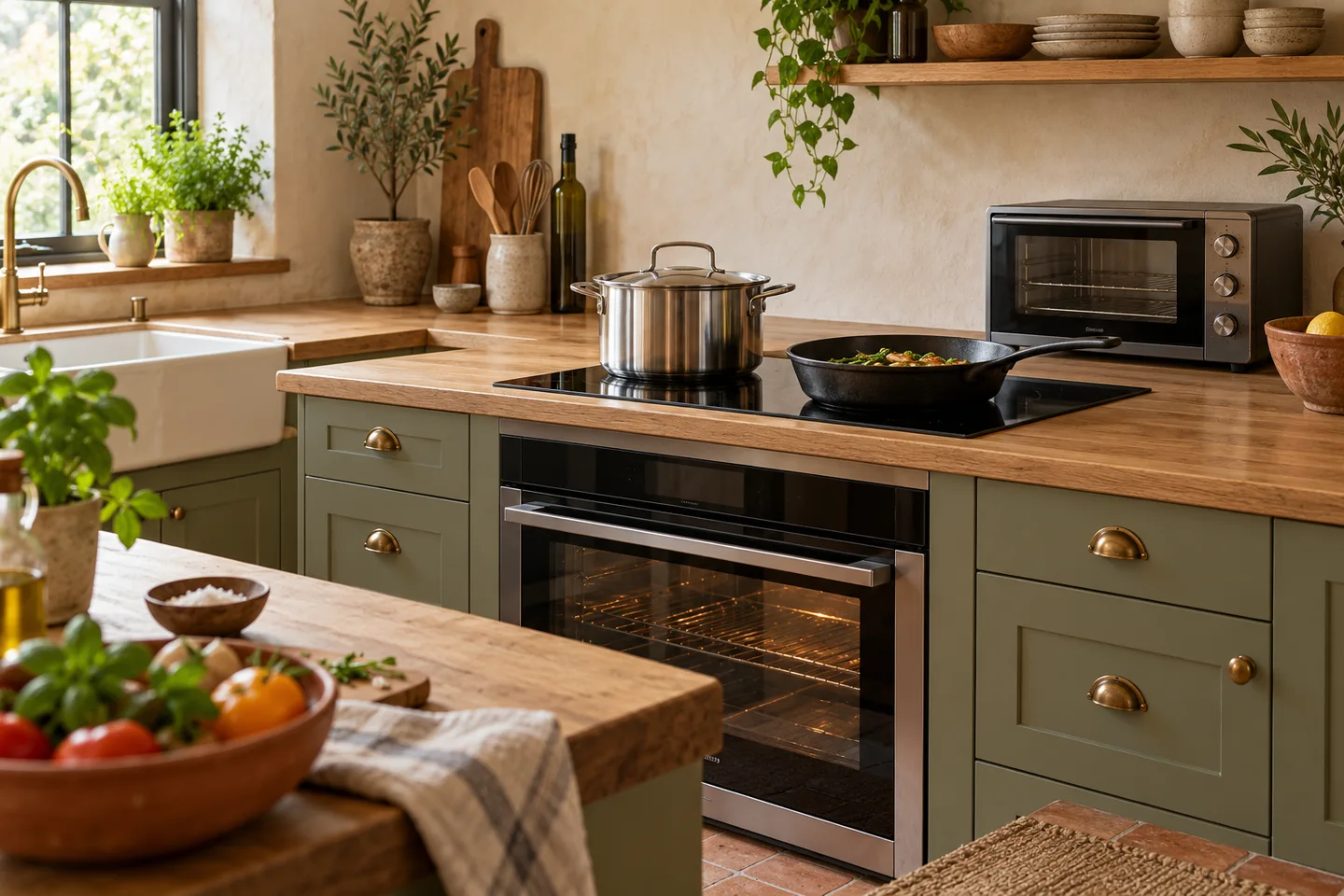
Explore the main ways to heat, cook, bake, and reheat food, from full-size cooking equipment to countertop alternatives.
- Ranges and cooktops
- Wall ovens
- Microwaves
- Air fryers
- Multi-cookers and electric pressure cookers
- Toasters and countertop ovens
See all: Cooking appliances
Specialty Cooking
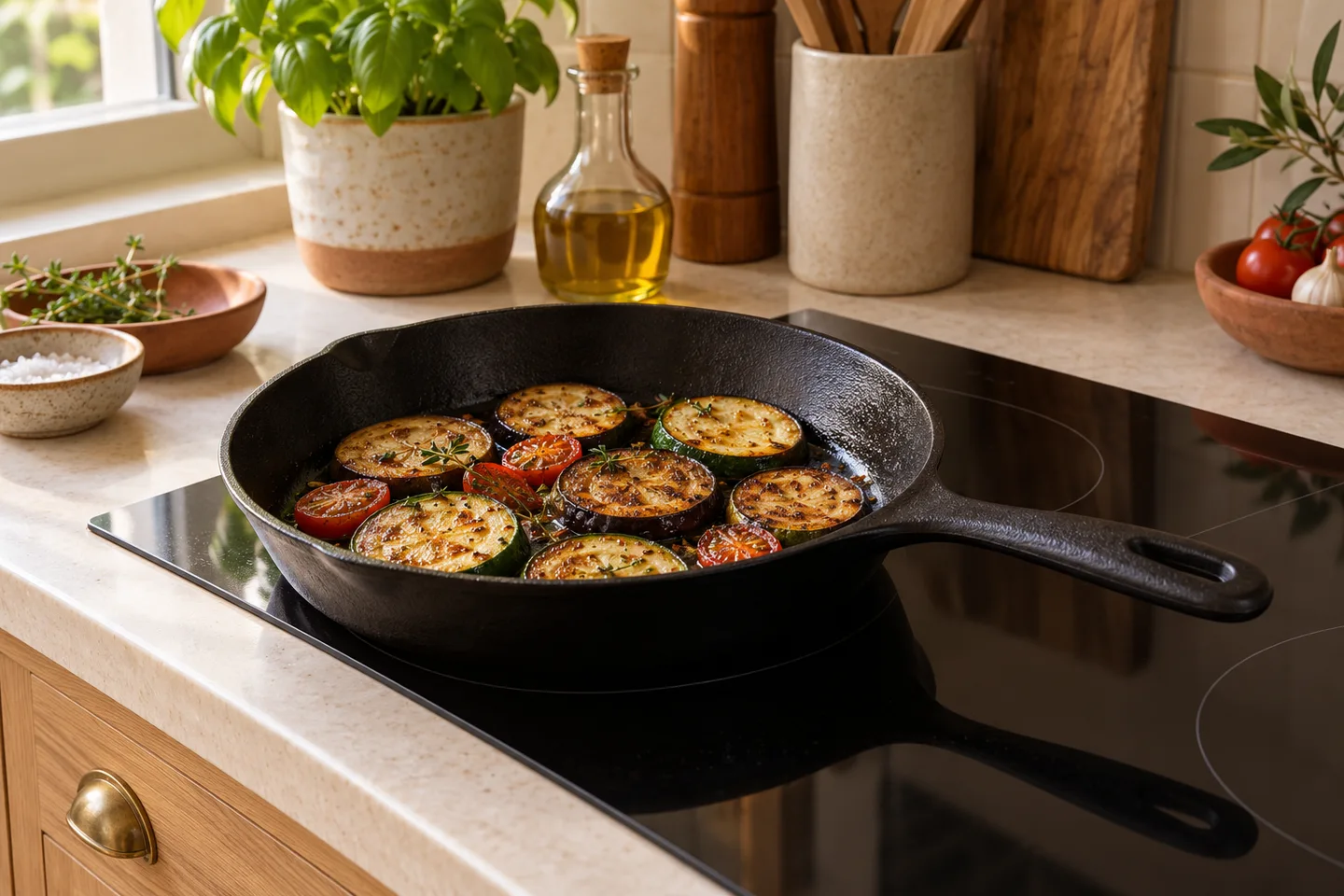
These appliances focus on a particular technique or type of food, such as grilling indoors, griddle cooking, bread making, or controlled-temperature water-bath cooking.
- Indoor grills
- Electric griddles, skillets, and woks
- Fryers, steamers, and hot pots
- Bread and breakfast makers
- Sous vide equipment
- Frozen dessert makers
See all: Specialty cooking
Food Preparation
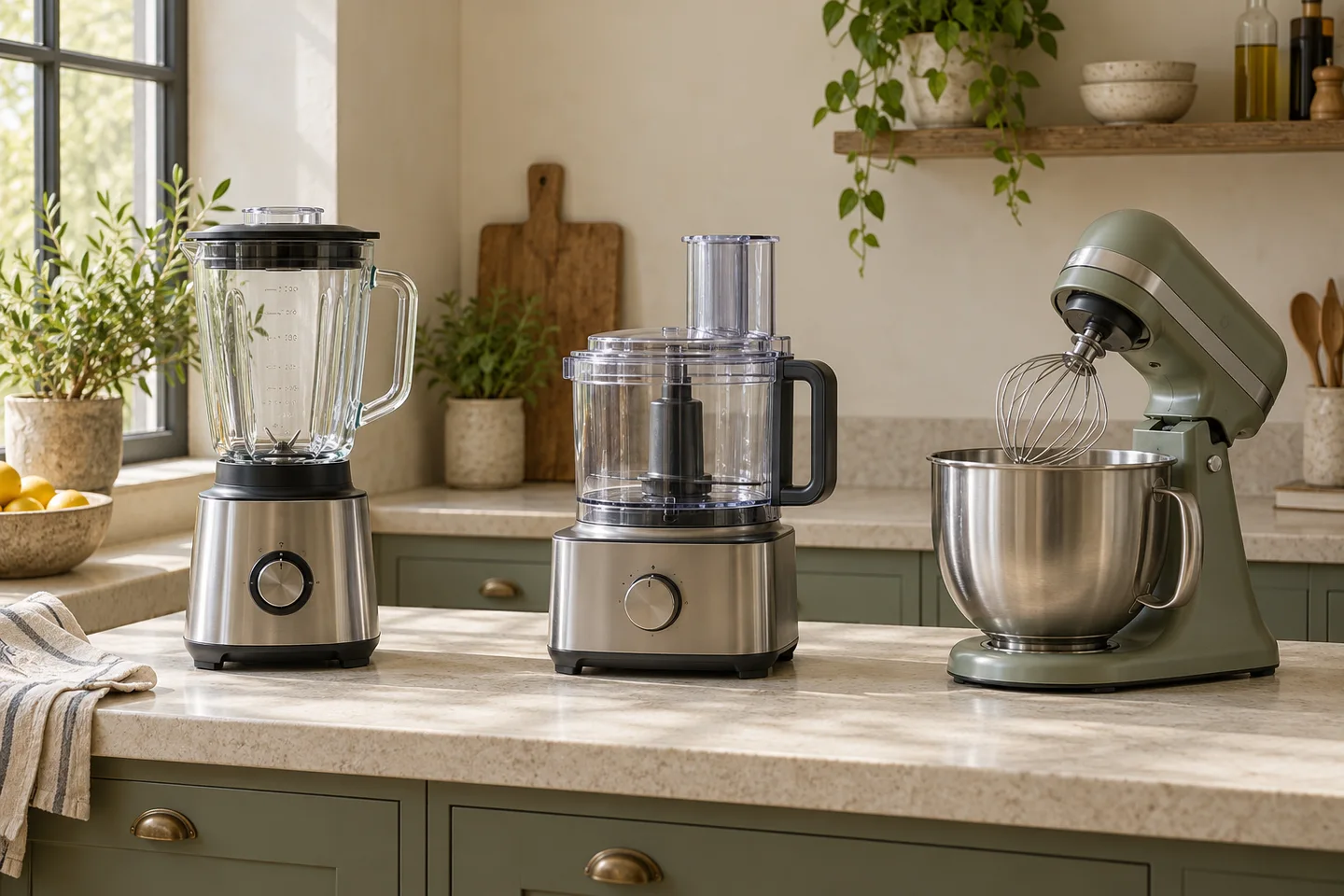
Find equipment for cutting, chopping, blending, mixing, extracting juice, and processing ingredients before they reach the heat.
- Blenders
- Food processors and choppers
- Mixers
- Juicers
- Grinders and slicers
See all: Food preparation
Coffee, Tea, and Beverages
Compare equipment by what it does in the drink-making process: brewing, preparing espresso, grinding coffee, heating water, or adding carbonation.
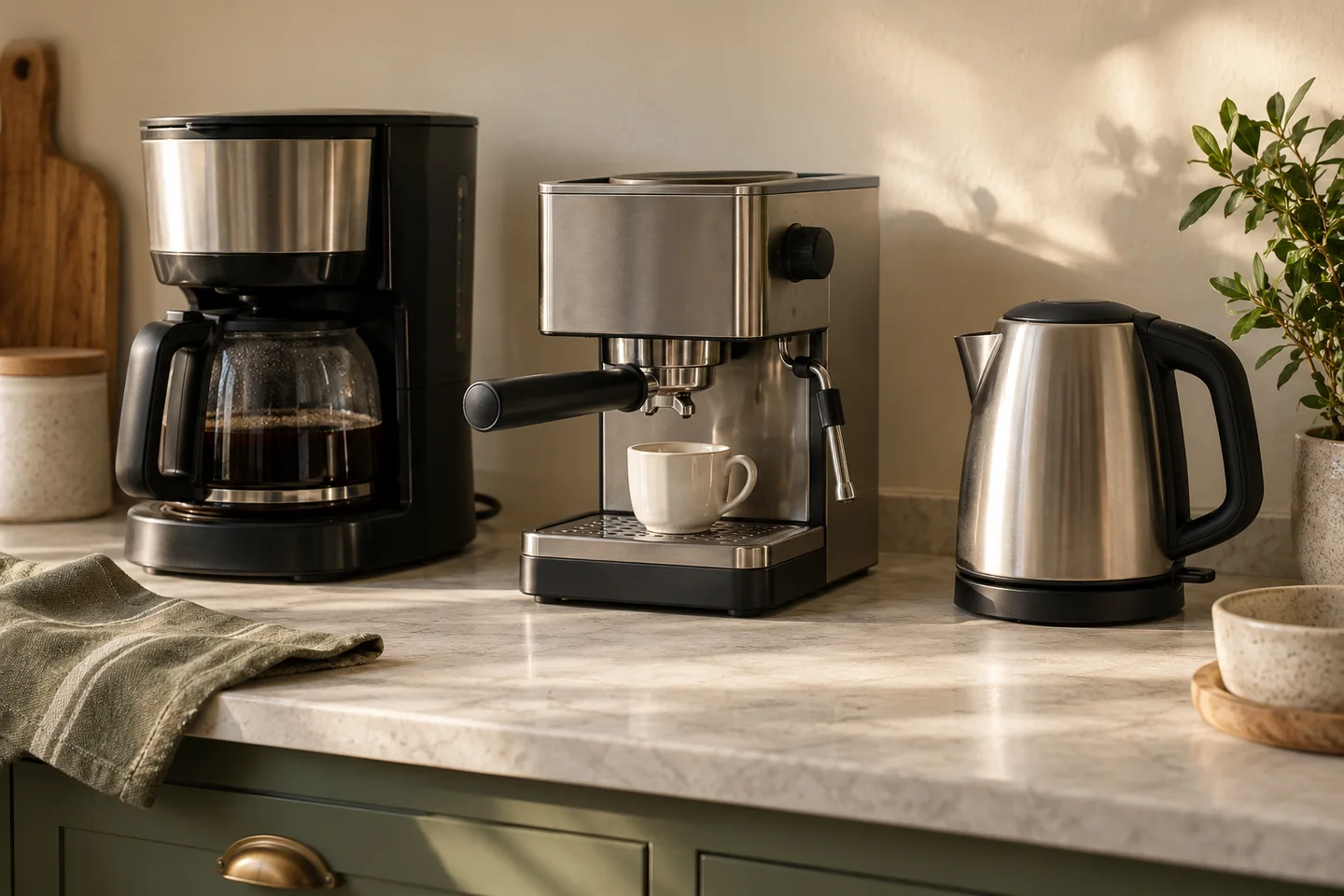
- Coffee makers
- Espresso machines
- Coffee grinders
- Tea makers and kettles
- Carbonated drink makers
See all: Coffee, tea, and beverage appliances
Refrigeration, Freezers, and Ice
Look at appliances for refrigerated storage, frozen storage, chilled beverages, and ice production. The right family depends on what you need to keep cold and where the equipment will fit.
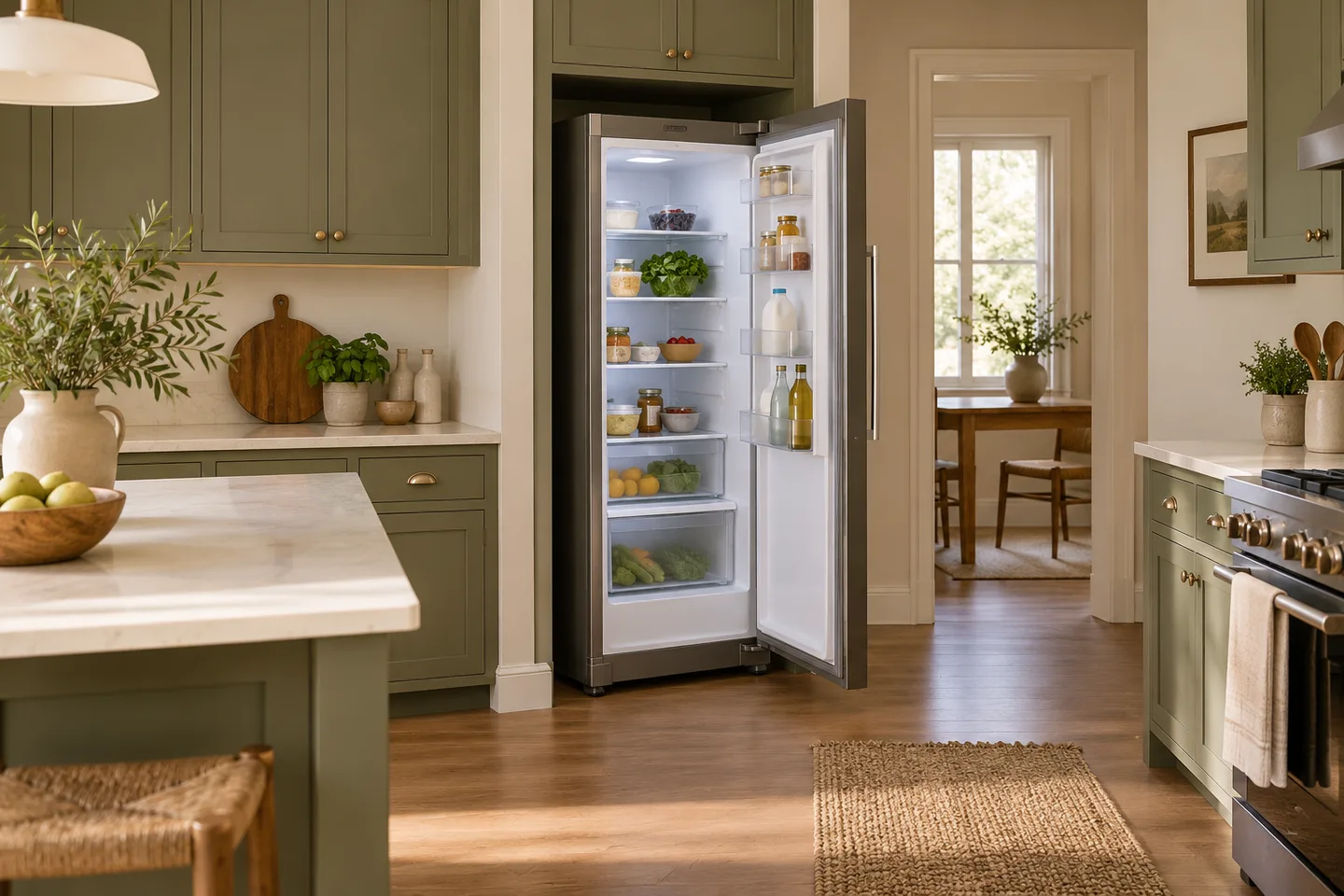
- Refrigerators
- Freezers
- Compact, beverage, and wine refrigeration
- Ice makers
See all: Refrigeration, freezers, and ice
Kitchen Cleanup, Ventilation, and Water
These categories address dishwashing, removing cooking exhaust, managing food waste at the sink, and treating kitchen water. Installation requirements differ substantially between them.
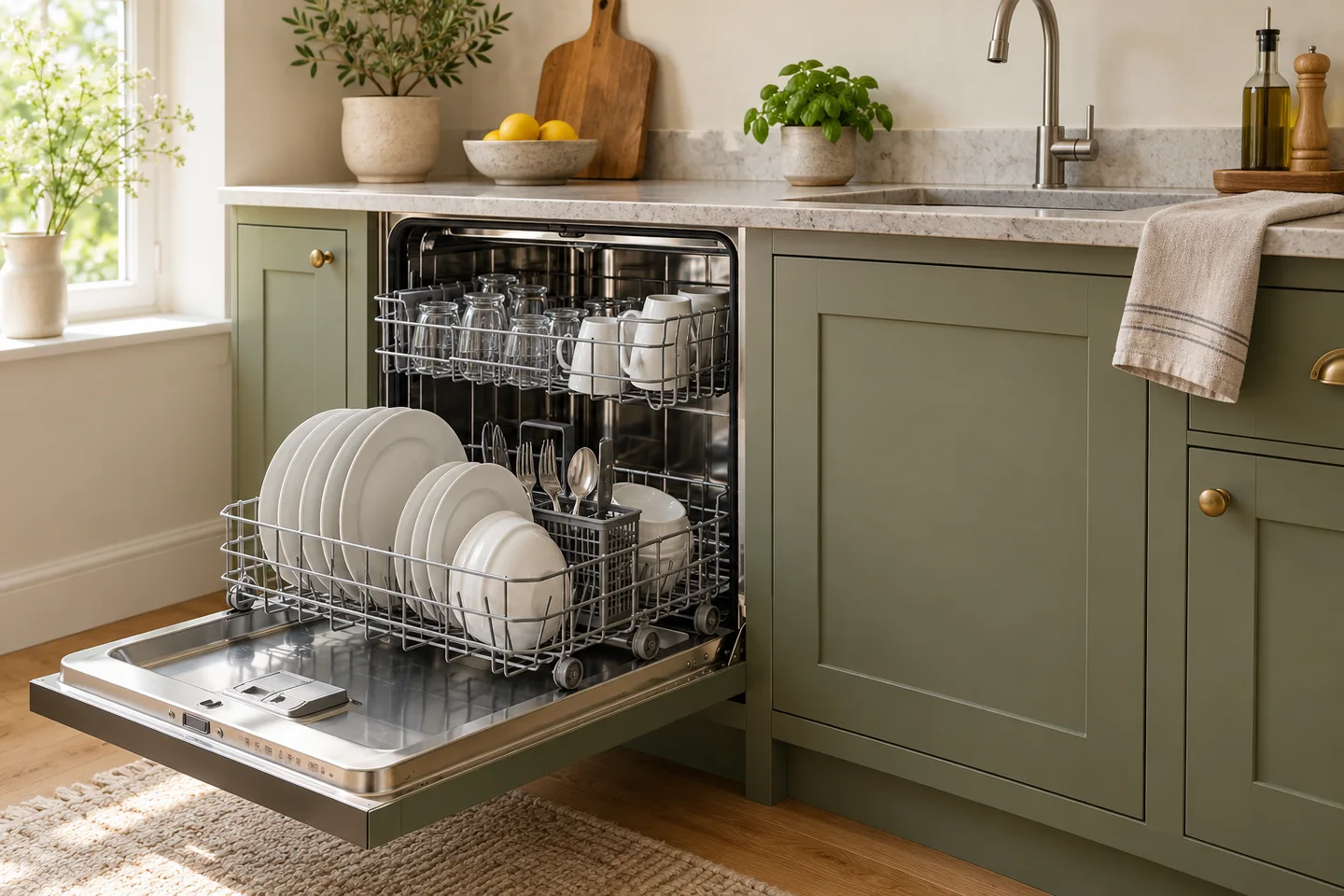
- Dishwashers
- Range hoods and kitchen ventilation
- Garbage disposals
- Kitchen water filtration
See all: Kitchen cleanup and water
Not Sure Which Appliance You Need?
Choose by the job first, then by the amount you need to handle and the limits of your kitchen. Ask what your current equipment cannot do well, how often the task comes up, what will fit, and how much upkeep you can accept. Before adding another appliance, check whether it solves a recurring problem that your existing equipment does not handle well.
- What result do you need? Name the actual task, such as crisping leftovers, chopping vegetables, making espresso, adding freezer space, or washing dishes. This points to an appliance family before you compare features.
- How much do you make or handle at once? Think in meals, servings, drinks, or dish loads. Capacity labels differ between appliance families, so compare usable space or batch size for the task instead of treating every advertised volume as equivalent.
- What space and connections are available? Measure the intended location and the route into it. Account for doors or lids opening, required clearances, and any power, water, drainage, or ventilation needs specified for that type of appliance.
- How often will you use it? A frequent task may justify dedicated equipment. For occasional use, check whether an existing appliance can do the job adequately without adding another device to store and clean.
- What fits your budget and maintenance routine? Consider the initial expense along with energy or water use, cleaning time, filters, descaling, and other consumables where applicable. For appliance classes with EnergyGuide labels, the annual operating-cost figure is an estimate, not a prediction of your household's bill.
Find the Right Starting Guide
- Comparing overlapping functions? Explore appliance comparisons to see where one type may substitute for another.
- Working with limited space? Plan an appliance mix for a small kitchen.
- Setting up a kitchen from scratch? Review first appliances for a new home.
Compare Appliances Before You Buy
Appliances can share cooking or preparation tasks without working in the same way. Before deciding that one device can replace another, compare the food or drink you make, the usable capacity, the attachments or cookware involved, and the cleaning and installation demands.
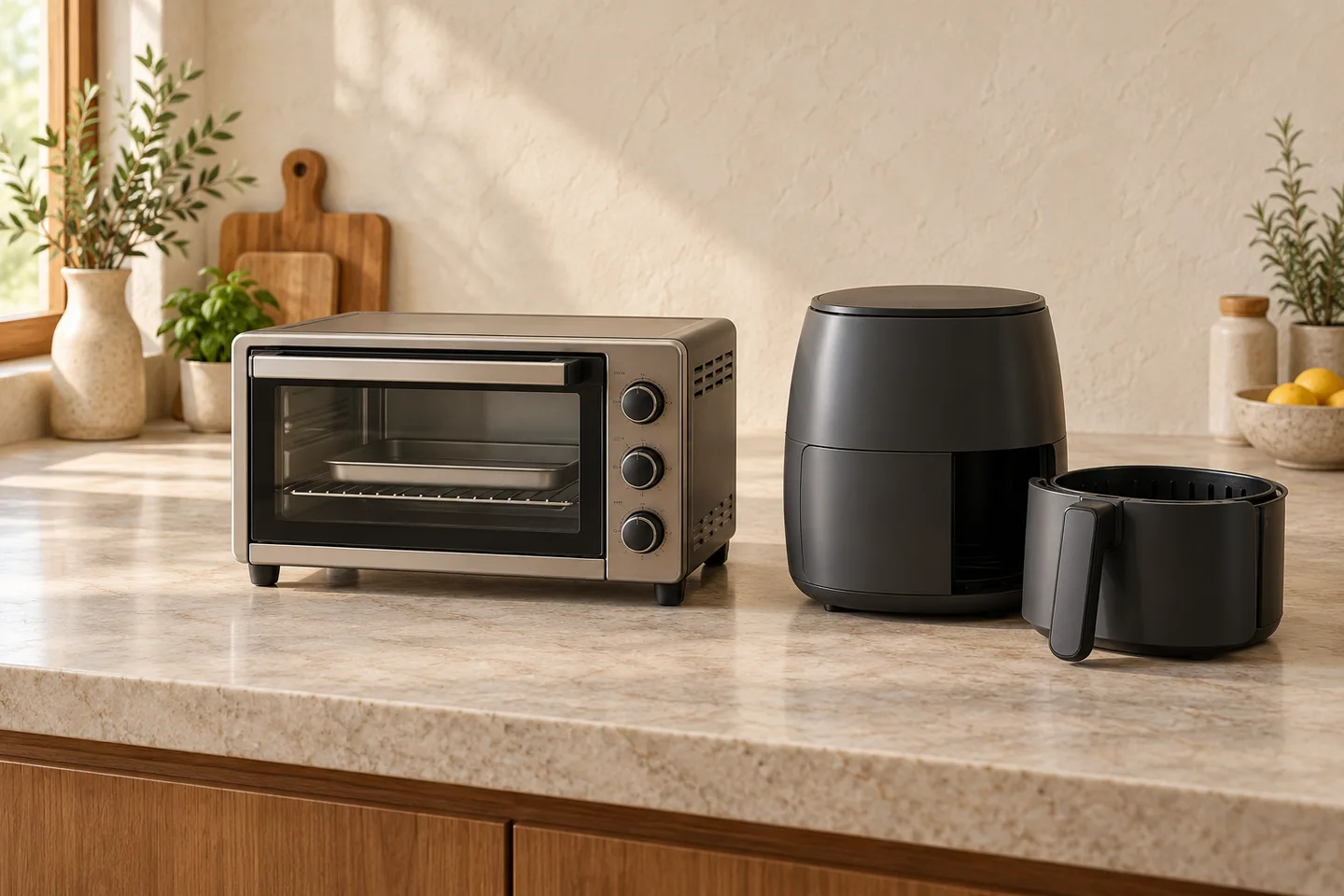
Air Fryer vs Toaster Oven
A basket-style air fryer circulates hot air around food in a compact basket, while a toaster oven uses racks and pans for toasting, baking, and reheating. Some toaster ovens also have air-fry functions, so compare usable food space and the dishes you prepare instead of relying on the label alone.
Compare air fryers and toaster ovens
Blender vs Food Processor vs Stand Mixer
A blender mainly purees and mixes pourable ingredients, a food processor chops, slices, or shreds, and a stand mixer mixes, whips, or kneads in a bowl. Attachments can create overlap, but a blending jar does not do the same job as a slicing disc or dough hook.
Compare blending, processing, and mixing
Rice Cooker vs Multi-Cooker
A rice cooker focuses on automatic rice cooking and often includes a keep-warm function. A multi-cooker can combine pressure cooking, slow cooking, steaming, and other modes, depending on its design. Extra programs do not by themselves establish better rice results; compare batch size, controls, and cleanup.
Compare rice cookers and multi-cookers
Juicer vs Blender
A juicer extracts liquid while separating out much of the produce pulp. A blender breaks down ingredients into a blended drink or puree without a separate extraction step. Choose by the texture you want, the ingredients you use, and the parts you will need to clean.
Compare juicers and blenders
Induction vs Gas vs Radiant Electric
Induction heats compatible magnetic cookware, gas uses a flame beneath the pan, and radiant electric heats an element under the cooking surface. The important tradeoffs include cookware compatibility, heat response, available utility connections, and ventilation needs for gas combustion.
Compare induction, gas, and radiant cooktops
Check the Practical Details First
Before settling on an appliance type, confirm four things: it fits the space, holds what you need to put inside it, works with the available utilities and ventilation, and is practical to maintain. A capacity number or a list of features cannot settle these questions by itself.
- Measure the entire space. Record the available width, height, and depth, along with the route the appliance must take into the kitchen. Allow for handles, open doors or lids, pull-out racks, and any clearance the manufacturer requires for airflow or access. Learn how to measure an appliance space.
- Check usable capacity, not just the advertised size. An oven's cavity volume does not confirm that your largest pan fits; an air fryer's basket capacity does not describe the food's usable cooking area. For refrigerators, inspect shelf and drawer arrangements; for dishwashers, consider the dishes, cookware, and place settings you actually load. Understand appliance capacity.
- Verify connections, installation, and ventilation. Check the applicable electrical supply, gas connection, water inlet, drain, exhaust route, and clearance requirements against the manufacturer's installation instructions. Do not assume existing hookups are suitable. Gas work and other regulated or fixed-service changes should be handled by qualified professionals under local requirements.
- Account for energy use and routine care. Consider time spent cleaning food-contact parts, descaling water systems, replacing filters or cartridges, and reaching parts that need maintenance. For appliance classes with EnergyGuide labels, compare estimated annual energy use and operating cost among similar appliances; actual household costs depend on use and local rates. Understand appliance energy labels.
Start With a Practical Buying Guide
Once you know the appliance family, start with the decisions specific to that type: its format, usable capacity, installation needs, and everyday operation. These guides cover different kitchen jobs, so choose the one that matches what you need to do.
Refrigerators
Compare refrigerator layouts by door clearance, shelf and drawer arrangement, and the food you need to store. Measure the installation opening as well as the appliance. Read the refrigerator guide.
Dishwashers
Start with built-in, portable, or countertop installation, then check whether the racks accommodate your dishes and cookware. Consider drying needs and stated noise levels. Read the dishwasher guide.
Air Fryers
Compare basket and oven-style formats by the food you cook, the usable cooking area, and countertop clearance. Check how easily you can reach and clean food-contact parts. Read the air fryer guide.
Blenders
Choose according to what you blend most often, from drinks and smoothies to soups and thicker purees. Check jar access, ingredient quantity, and cleaning needs. Read the blender guide.
Food Processors
For chopping, slicing, or shredding, compare work-bowl size and the blades or discs provided. Check whether the feed opening and bowl accommodate your usual ingredients. Read the food processor guide.
Espresso Machines
Manual, semi-automatic, and more automated machines differ in how much grinding, dosing, extraction, and milk preparation you handle yourself. Choose a workflow you will use regularly. Read the espresso machine guide.
Ranges and Cooktops
Decide whether a single range or a separate cooktop and oven suits the kitchen. Then compare heating technology, cookware compatibility, utility connections, and ventilation. Read the range and cooktop guide.
Coffee Makers
Match the brewing format to the amount of coffee you make and how much of the routine you want to handle yourself. Consider water access, cleaning, and serving capacity. Read the coffee maker guide.
Multi-Cookers
Check the cooking modes you will actually use, such as pressure cooking, slow cooking, or rice cooking; available modes differ by device. Compare pot capacity, lid care, and operating instructions. Read the multi-cooker guide.
Range Hoods
First check whether outdoor ducting is feasible or whether a recirculating setup is the practical option. Then review hood placement, cooking-area coverage, filter maintenance, and installation requirements. Read the range hood guide.
How We Research Kitchen Appliances
CookDevices guides start with published information that can answer the reader's question: official guidance for safety, published specifications for construction and fit, and documented findings for performance. We distinguish those sources because a listed feature, a documented finding, and an owner's experience do not establish the same thing.
- Safety guidance and energy labels. Consumer Product Safety Commission recall notices and USDA food-temperature guidance address different safety questions. FTC EnergyGuide information and EPA ENERGY STAR criteria help explain energy use for the appliance classes they cover; neither is a rating of cooking results or overall product quality.
- Technical documents and installation instructions. Manufacturer manuals and specification sheets describe dimensions, available functions, connections, clearances, and care requirements. These details must be checked for the particular appliance, especially when a category contains different sizes or installation types.
- Independent research and owner experience. Independent research is useful when its sources and methods are clear. An owner's report may point to an issue worth investigating, but a single experience cannot establish how reliably an entire appliance class performs.
Our guides use these distinctions to explain practical tradeoffs in capacity, kitchen fit, daily operation, and maintenance. Read how CookDevices researches and evaluates appliances.
Check Safety, Recalls, and Food Temperatures
Safe use involves three separate checks: whether an appliance has a current safety warning, whether food has reached the appropriate internal temperature, and whether the equipment is installed and operated as instructed. A cooking preset or general appliance guide cannot replace these checks.
Check Appliance Recalls
Use the manufacturer's name and the model number on the appliance label to search current Consumer Product Safety Commission recalls and safety warnings. If your appliance is affected, follow the recall instructions before using it again. Learn how to check kitchen appliance recalls.
Verify Food Temperatures
Cooking time, browning, and appliance presets do not reliably confirm the safe internal temperature of meat or poultry. Use a food thermometer and the guidance for the specific food; for example, poultry must reach 165°F (74°C). Check safe internal food temperatures.
Follow Installation Instructions
Check the manufacturer's manual for required connections, clearances, ventilation, and maintenance. Gas work and other fixed utility changes should follow local requirements and be handled by qualified professionals. Review range and cooktop installation checks.
Who Is Behind CookDevices?
CookDevices publishes educational guides about kitchen appliance types, their practical differences, and what to check for fit, safe use, and maintenance. Our editorial policy and research approach explain the standards behind this content. To question a claim or suggest a correction, contact CookDevices and identify the page involved.